Covering Tyneside, Wearside, County Durham and Northumberland quotes@tynerend.uk 0191 666 0397
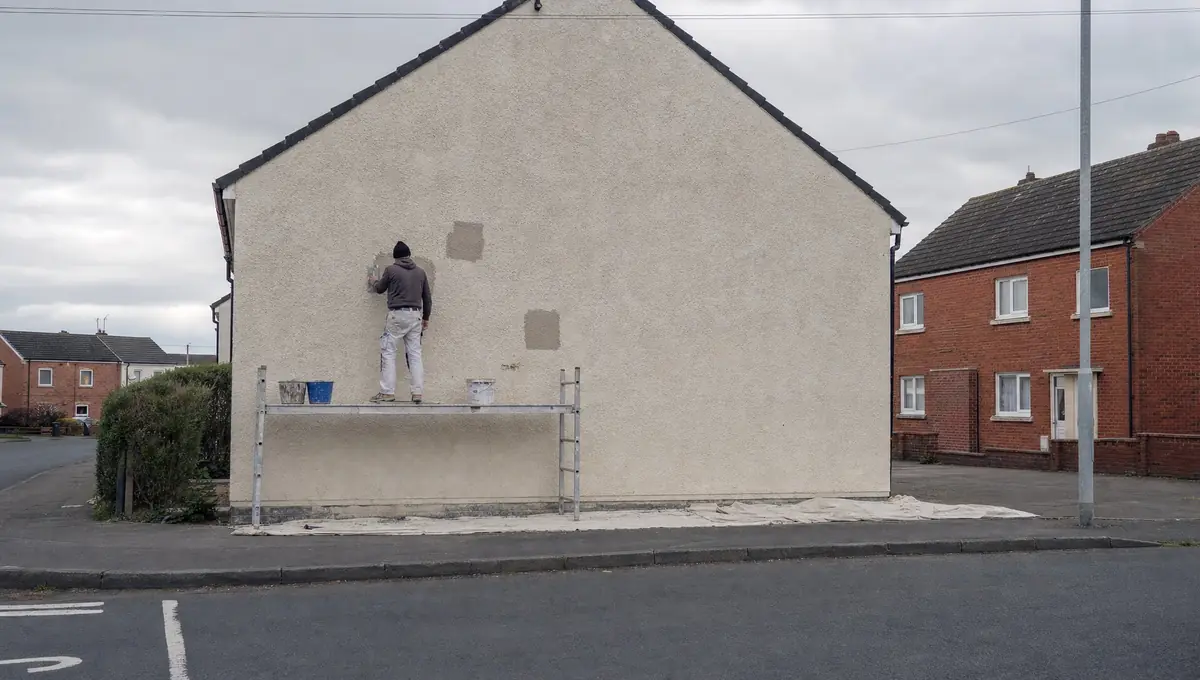
Renderer on a low scaffold platform filling a patch on a cream rendered gable wall, with two darker repair patches nearby

Cracked or Blown Render? We Repair It

Render Repair Service in the North East

Expert Render Repairs for Houses, Flats and Period Homes

Blown Render Repair Service for Homeowners

  • Free visit and quote
  • Finish matched to your wall
  • Houses, flats, period homes
Free survey request

Book a free visit

No obligationWritten quote
We only use your details to reply

DamageCracked or blownloose and crumbling render cut out
MatchColour and texturefinish matched to the wall you have
RoutePatch or re-rendertold straight which one suits
PriceFree quoteafter a visit, no pressure

Our render repair service at TyneRend fixes cracked, blown and crumbling render on homes across the North East. We repair render on detached houses, semi-detached houses, terraces, bungalows, flats and period homes. If your exterior walls look tired or damp is showing, we can sort it.

We are a render repair company that finds the cause, not just the crack. Our render repair specialists inspect the wall, cut out what has failed and rebuild it so the finish matches. You get expert render repairs that protect your home and bring back its kerb appeal.

Planning a brand new coat across the whole house? That sits with our separate house rendering service. This page is about repairing the existing render you already have.

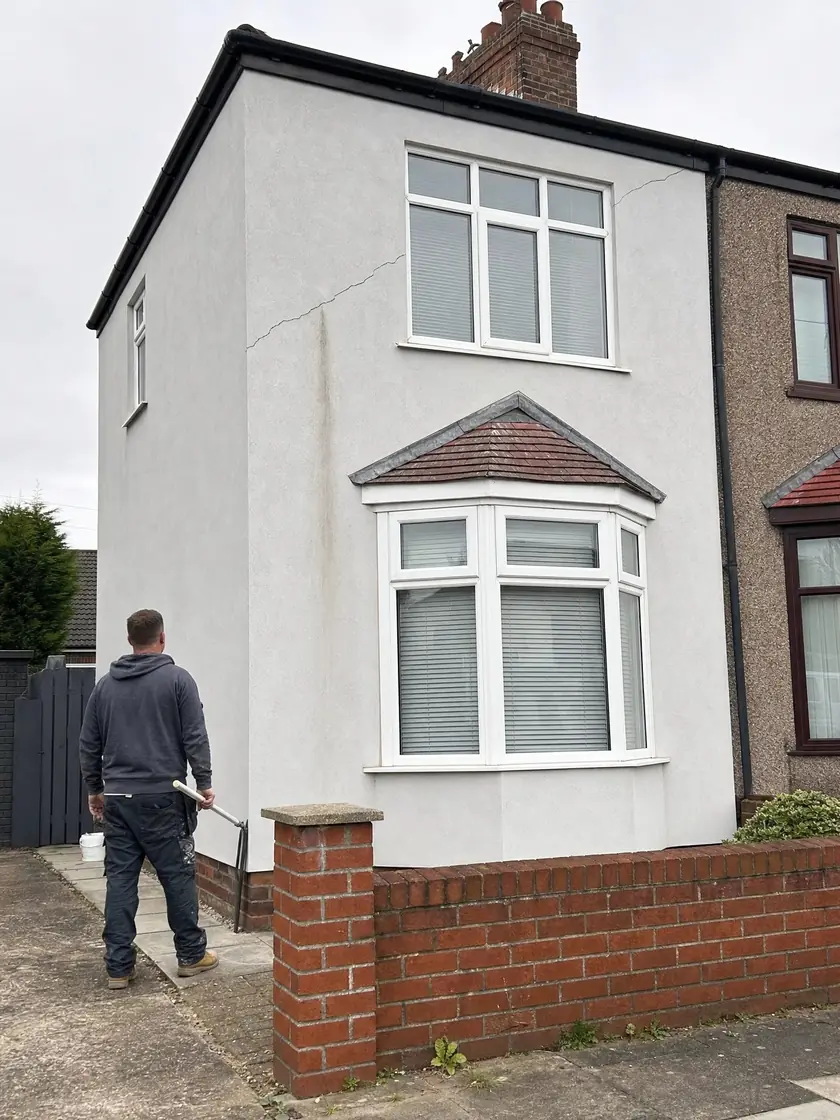
Pale grey rendered semi-detached house with a crack across the render beside the upstairs window, a rain stain running down towards the bay window and a tradesperson looking up from the path
A crack after a wet winter
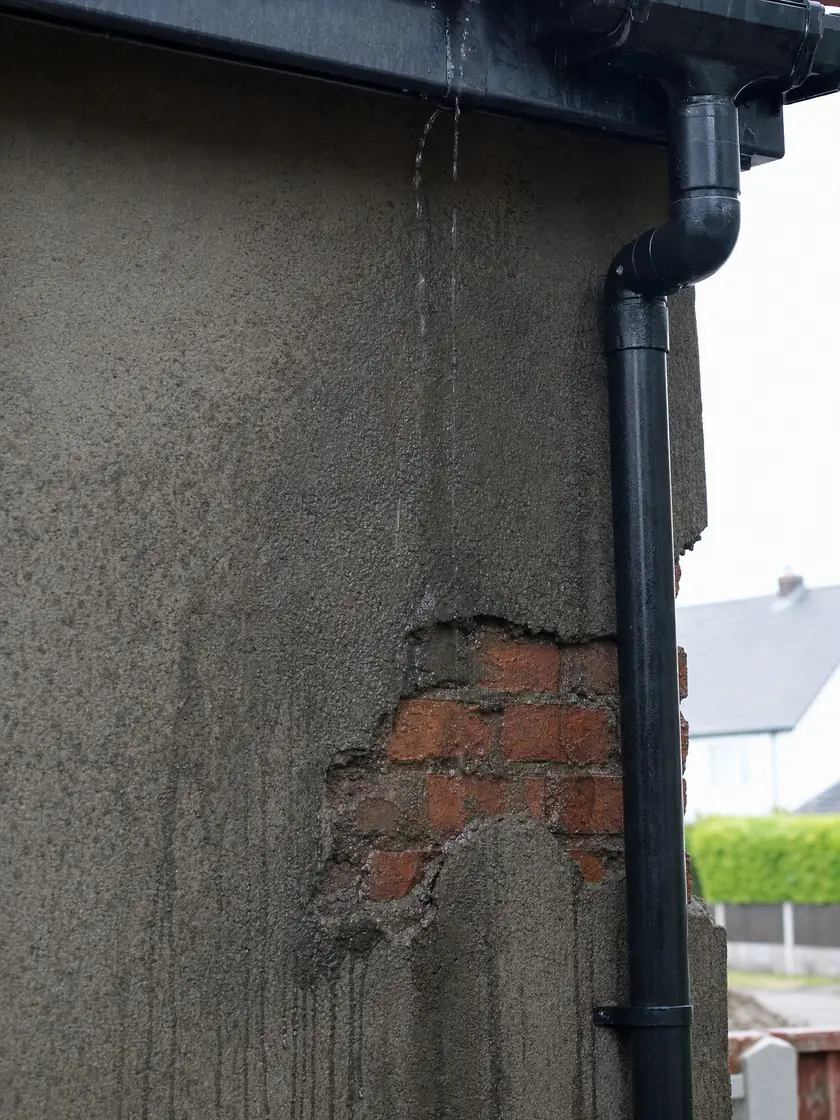
Dark rain-soaked rendered wall under a dripping gutter joint, with a blown patch of missing render showing red brick
Where the water gets in

Why Damaged Render Needs Repair Before the Weather Does More Harm

What Does Render Do for Your Exterior Walls?

Render is the coat that covers your exterior walls. It gives weather protection and a smooth, clean look. It also keeps rain away from the brick or block behind it, which is how it helps protect the building.

When render fails, water finds a way in. Damaged render can let water reach the masonry and cause damp inside the house.

That is why timely render repairs matter long before the damage looks bad. Early render repairs also cost far less than late ones.

Good exterior wall rendering does two jobs at once. It protects the building from the weather and it improves the appearance of the whole front.

When either job slips, you notice it fast, and the appearance of the street suffers too. A worn exterior drags down the whole row.
How Much Rain and Frost Do UK Walls Take Each Year?

The UK gets around 1,163mm of rain in an average year. Measurable rain falls on about 159 days, which is roughly three days in every week. The UK also sees about 53 days of air frost a year.

Water that gets into a crack and freezes pushes it wider. Rain is rising too, with average UK rainfall up by 7.3% between the 1961 to 1990 period and the 1991 to 2020 period. That kind of weather exposure is hard on any exterior wall rendering and on every older building.

Some cities get it harder. Cardiff's walls face around 1,203mm of rain a year, on about 153 days. Glasgow gets around 1,153mm and about 45 days of air frost.

How Many UK Homes Already Have Wall Problems?

The UK has about 30.6 million homes. That is a huge area of external walls facing the weather every day.

Every one of those homes needs care. In England, around 460,000 homes had walls needing major repair or replacement in 2023, which is about 2% of homes.

More than three million English homes also had at least one external element in poor condition that year. That covers external walls, roofs, windows and doors. Small defects left alone are how many of them got there.

Cracked or blown render?Send a few photos and the details and we will tell you whether it needs a patch or a full re-render.

Signs You Need Render Repairs and What They Tell Us

How Can You Tell Render Is Cracked, Blown or Hollow?

Hairline cracks are common and often harmless. Small cracks wider than a hairline can let water into the render. We treat those as a repair needed sooner rather than later.

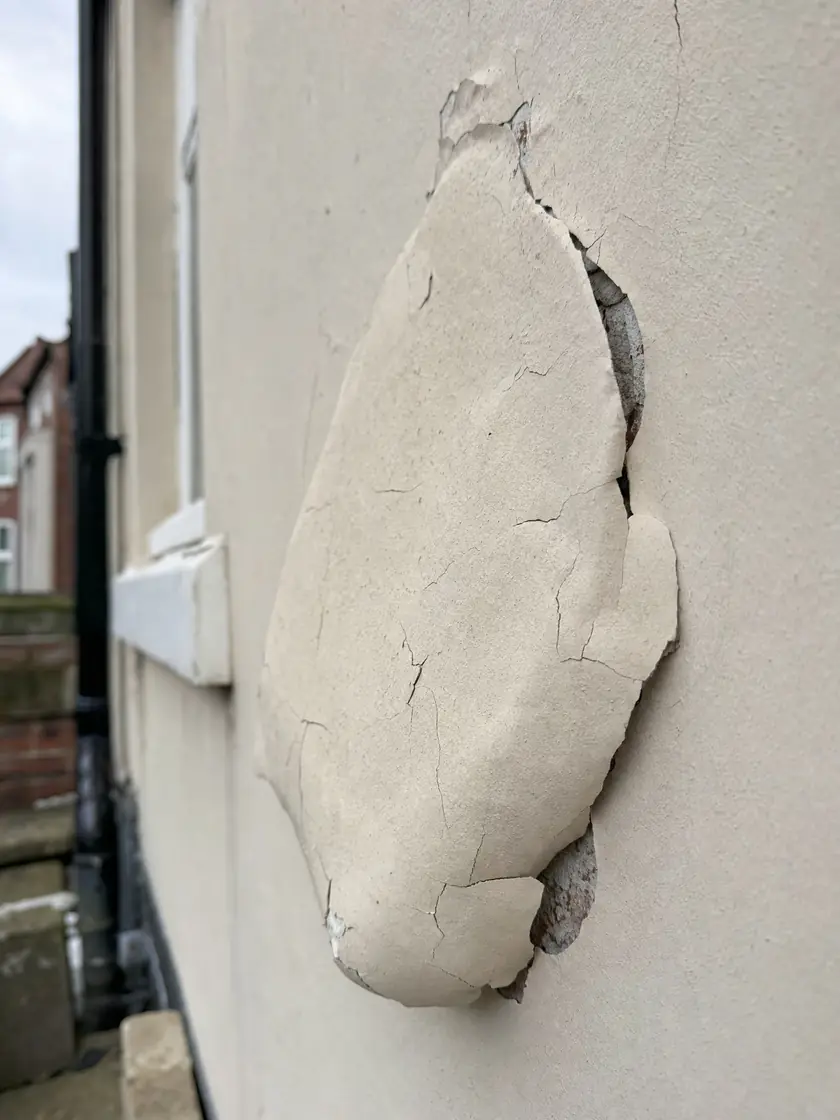
Blown render has lost its grip on the wall. When we tap it, it sounds hollow. It can look fine, then drop off after the next hard frost.

What Do Stains, Flaking and Damp Patches Mean?

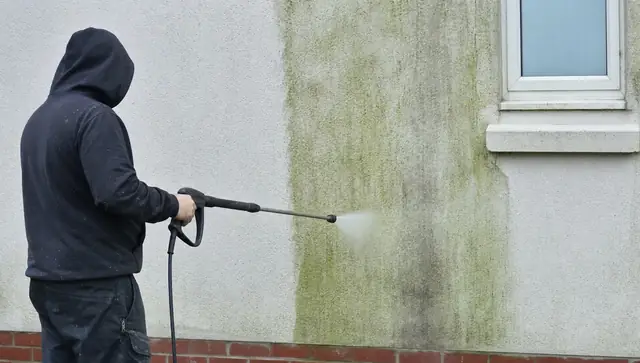
Flaking, blistering and spalling often mean moisture is trapped behind the render. Crumbling finishes point to the same problem. Green or black growth on the surface can also mean the wall is staying wet.

Damp patches inside or outside a property can come from damaged render. A damp patch on a property wall is often the first sign homeowners notice.

About 1.4 million English homes had damp a surveyor could see in 2024, which is around 5% of homes. Among English homes with an external element in disrepair, 15% also had a notable damp problem.

What Causes Render Damage in the First Place?

We see the same causes again and again. Here are the main ones:

  • Water ingress through cracks, gaps or failed seals
  • Penetrating damp working in through the wall
  • Thermal movement as the wall heats up and cools down
  • Poor installation, such as a weak mix or a rushed job
  • Failed movement joints that no longer take the strain

We find the cause before any work starts. If we skipped that step, the render repair work would fail again. Most render problems come back when only the symptom gets fixed.

Water ingress is the one we hunt for first, because water ingress behind a patch undoes the work. We find where the water ingress started and stop it there.

Close-up of old painted render lifted into a large hollow blister with cracks and flaking paint beside a window
Blown render
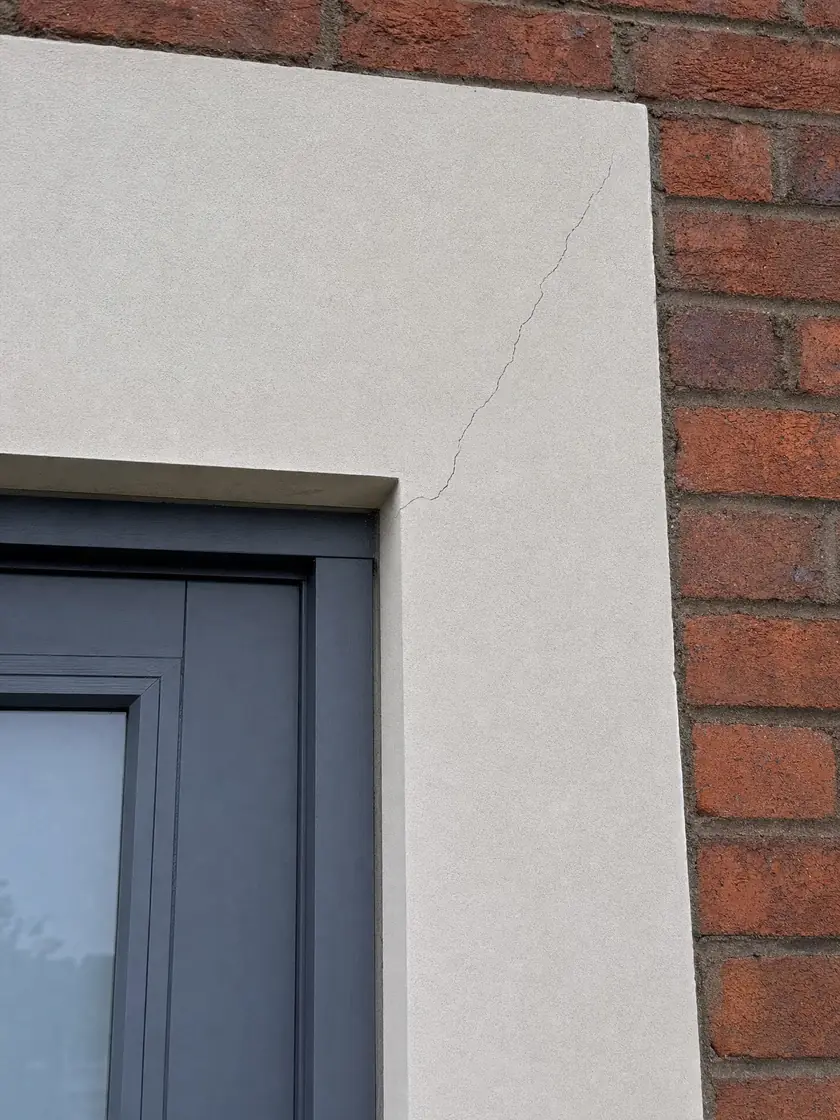
Fine crack running diagonally up from the corner of a door opening across smooth pale render beside red brick
Reading the crack

Does Cracked Render Mean Subsidence or Something Else?

Most cracked render does not mean subsidence. Shrinkage, weather and thermal movement cause most cracks. A poor mix or a weak bond does the rest.

We still check for warning signs. Wide cracks, cracks running diagonally from window or door corners, and cracks that grow wider toward the top can point to structural damage. Sticking doors or matching cracks on inside walls are other signs.

If we see those signs, we stop. We tell you to get a surveyor or structural engineer before we touch the wall. New render over a moving wall only hides the problem, and the cracks come back.

Free visit and quoteKnow the cause before the repairWe inspect the wall, find the cause and tell you straight whether it needs a patch or a full re-render.
Cause firstWe fix why it failed, not just the crack
Finish matchedColour, texture and sheen to suit your wall

Patch Repair or Full Re-Rendering for Your Home?

When Is a Patch Repair Enough?

A patch repair works when most of the render is sound and the damage sits in one area. Small cracks can be filled with an acrylic-based sealant. Larger cracks mean we cut out the affected area and replace the render.

Localised repairs are cost effective compared with full re-rendering. The cost of a patch is a fraction of the cost of a new coat, and a cost effective repair keeps more money in your pocket.

Minor jobs can be done within a day, depending on the extent of the damage. We add texture so the repair blends with the surrounding finish.

Patching also keeps the rest of your existing render in place. That means less mess, less waste and a shorter wait. It is often the best first step for render repairs on a home with one or two weak spots.

When Is Re-Rendering the Better Choice?

Re-rendering makes sense when blown render spreads across a wall. If hollow patches show up in several places, patching only delays the problem. We remove the failed render and apply a compatible render mix in several coats.

We will tell you which route suits your house. If a patch will last, we say so. If the wall needs re-rendering, we explain why before you spend a penny.

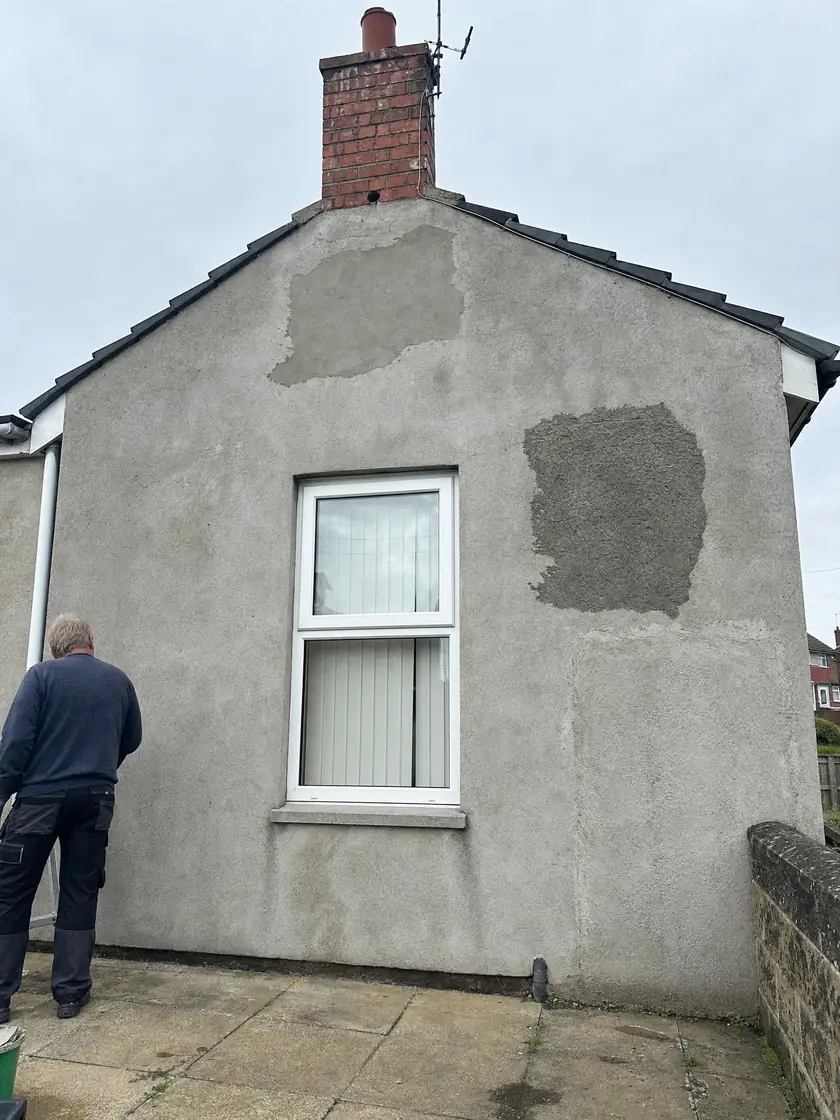
Grey rendered gable end with three repair patches in different shades and textures, and a tradesperson standing beside the wall
Patches that never matched
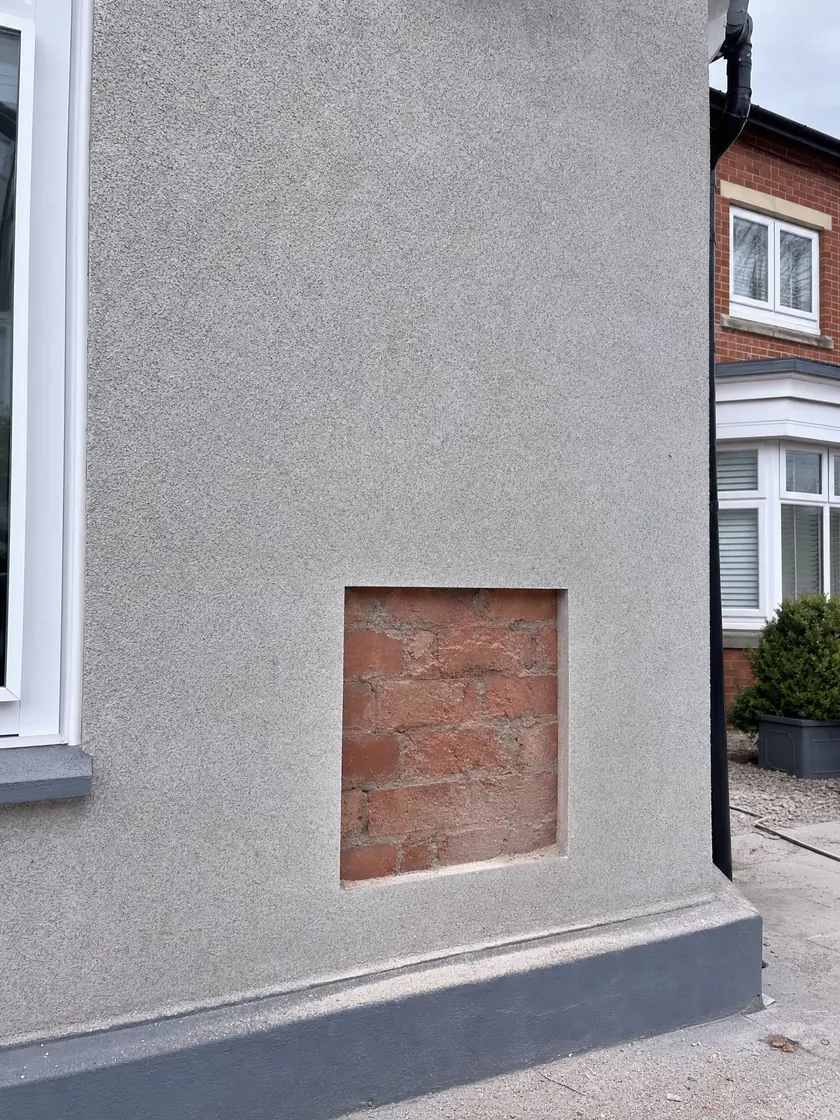
Square cut out of a grey rendered wall with clean edges, showing cleaned red brick behind
Cut out back to sound render

How Our Render Repair Process Works From First Visit to Finished Result

How Do We Check and Diagnose the Damage?

We look at the whole wall, not just the crack you spotted. A proper assessment can find hidden issues such as damp penetration.

We want to know why the render failed before we pick a repair. The extent of the damage often goes beyond what you can see.

Then we mark out the affected area and agree the plan with you. We start only when you are happy with the plan, and we carry out the work to that plan.

You see what we see, and you know what the job involves. No surprises later.

How Do We Remove Loose Render and Prepare the Wall?

We carefully chip away loose or crumbling render until we reach sound material. Then we clean the exposed masonry and apply a suitable bonding agent. Good preparation is what makes a repair hold.

This part of the process takes patience, and our whole process is built to avoid callbacks. Rushed preparation is the main reason a patch lets go a year later.

How Do We Fill, Patch and Rebuild the Wall?

Next we repair render with a compatible mix, built up in coats. Polymer render has additives that help cut down future cracking, so we use it where it suits. We never rely on simply filling a crack and painting over it.

When we repair cracks that move with the seasons, we use flexible materials and treat the joint properly. That gives the repair room to breathe. Cheap materials fail early, so we pay for the right materials.

The quality of the mix and the skill of the hand both matter here. We use quality materials and we are proud of our quality of finish.

How Do We Texture, Seal and Paint the Repair?

We texture the new section so it blends in with the old. On a smooth finish, we match the trowel pattern. Then we seal it and paint it with breathable masonry paint.

Once painted, the section dries to a smooth, even finish. The aim, on every exterior, is a desired finish that you cannot spot from the pavement. It takes skill to achieve that, and we do not rush it.

Breathable paint and other protective coatings let the wall dry out while keeping rain off. Good protective coatings also resist algae and stains, which keeps the exterior looking fresh.

They also make the finished result last longer. We colour-match your finish before we start.

Render getting worse?One call books a free look at the damage anywhere in the North East.

Which Types of Render Can Our Specialists Repair?

Every wall has a different type of render, and each type of render needs its own repair. We match our render materials to what is already on your house. That keeps the repair strong and the finish even.

How Do We Repair Cement, Sand and Cement and Lime Render?

Cement render is a hard-wearing choice on many modern houses. Sand and cement mixes are very common on older repairs. On older walls we use lime render, because it works with the wall rather than against it.

Lime-based materials are kinder to soft old brick and stone. Older buildings need materials that let the building breathe, and we choose building materials that suit its age.

A hard cement patch on soft brick can trap water. So we pick the right type of render for the job.

How Do We Repair Monocouche, Acrylic and Pebble Dash Render?

Monocouche render is a single coat system, so we match its colour and texture with care. Acrylic render can go on as a topcoat to refresh existing render.

Pebble dash carries decorative aggregates in the surface, and we match those too. Our render finishes always follow the pattern already on your home.

Modern render systems come in many render finishes, including textured finishes. Each render system has its own rules, and each one has its own render finishes to match. We check which render system is on your house before we order anything.

A weather resistant coat of acrylic render or monocouche render can bring a tired front back to life. If your wall also needs insulation, that is handled by our external wall insulation service.

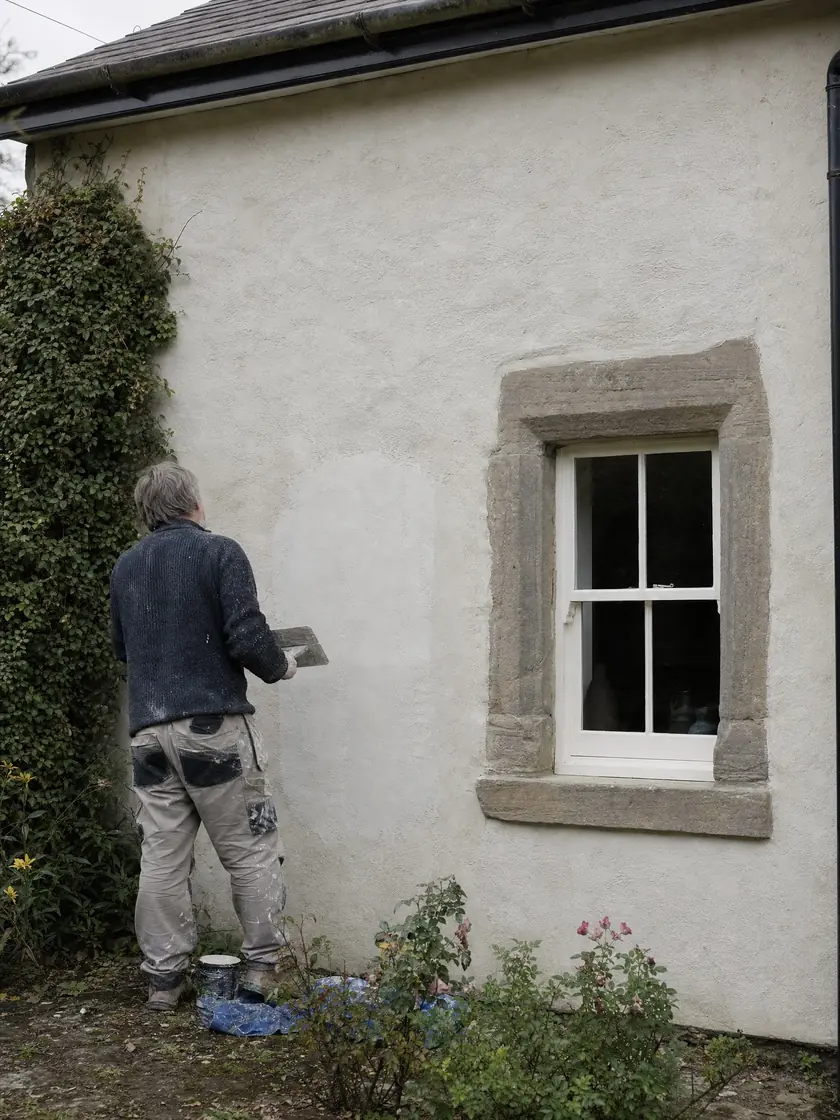
Tradesperson holding a hawk beside a soft off-white lime rendered cottage wall with a stone window surround and a slightly paler fresh patch
Lime render on an old wall
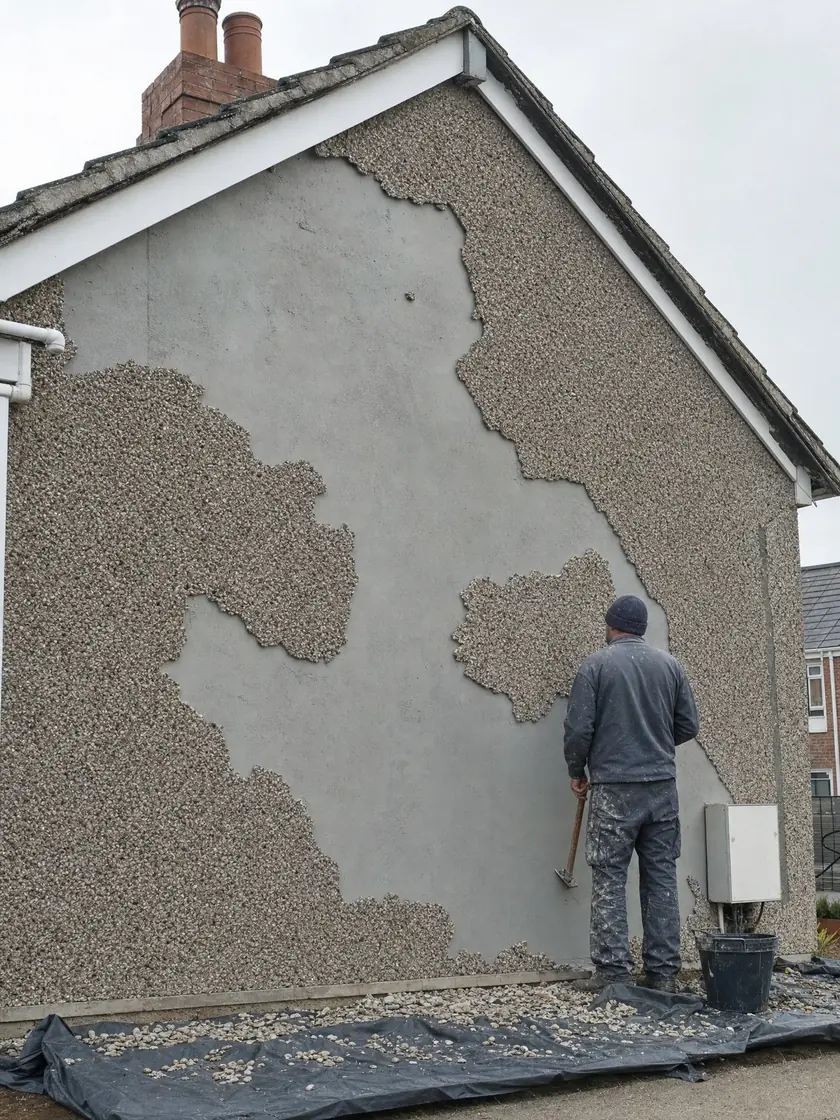
Pebble dash gable wall with large bare grey patches where the stones have fallen away, a worker beside the wall and loose pebbles on the ground sheet
Pebble dash in patches

Who Books Our Render Repair Service and Why?

Most of our customers are homeowners with a clear problem, and you can read our reviews to see what they say. A semi-detached house shows a crack over the bay window after a wet winter.

A terraced house has a blown patch that sounds hollow near the gutter. A buyer or seller finds the survey flagged the render.

Flats and older homes need extra care. Around 74% of Glasgow households live in flats, compared with 36% across Scotland, so shared walls and tenement fronts need a plan. In England, converted flats had the highest damp rate by dwelling type at 9%, and homes built before 1919 had a 10% damp rate.

Solid walls take a lot of punishment too. Storm-related moisture damage hit 28% of English homes with solid masonry walls, against 14% with cavity walls. Where walls are uninsulated, damp showed up in 8% of homes, compared with 3% of insulated ones.

Other jobs we see often include pebble dash falling away in patches, gaps left after a boiler flue or cable was moved, and old cement render trapping water on a period cottage. Whatever the cause, we carry out render repairs on the exterior and fix the reason it failed.

Scroll for the full detail
Not sure how bad it is?We inspect the wall, find the cause and tell you straight, with no pressure.

Why Homeowners Choose TyneRend for Render Repairs

As a rendering company, we keep it simple. We explain what we find, we show you the damaged render and we tell you the cost before we start. Your quote sets out the work, the materials and what we cover.

Our team also cares about the look. We offer our services to homeowners across the North East. A repair that stands out is a bad repair, so we match the colour, texture and finish of your exterior wall rendering.

Careful exterior wall rendering is what keeps a repair out of sight. Your house keeps its kerb appeal and its appearance, and the wall gets its weather protection back.

We can repair render on single walls, whole elevations and tricky spots such as chimney breasts and window reveals. Our exterior wall rendering services cover repair work from small cracks to larger areas. We also repair exterior walls on garages, extensions and porches.

Every exterior job gets the same care. We carry out external rendering repairs on all common house types, and we treat external rendering on flats the same way. Good external rendering work starts with a good repair plan.

How Do We Look After Your Home During the Work?

We cover doors, windows and the ground below. We keep the work area tidy, and we clear up at the end of each day.

Repairs go on outside, so you can stay at home. Our building skills cover brick, block and stone, so we know what sits behind your render.

Your exterior walls stay in view of the street, so quality matters to us. Exterior walls are the first thing visitors see.

We check each section before we move on. We would rather take an extra hour than leave a flaw.

What Will Your Wall Look Like When We Finish?

When we finish, the repaired area should match the rest of the wall in colour, texture and sheen. The surface is sealed against water, and the integrity of the render is back. That is the finished result we aim for on every job.

A good repair also protects your home's value and appearance. Tidy exterior walls help a house sell and help it hold its price.

Fresh, even render restores the integrity of the front and the confidence of the owner. Sound exterior walls and a clean exterior finish make a home feel cared for.

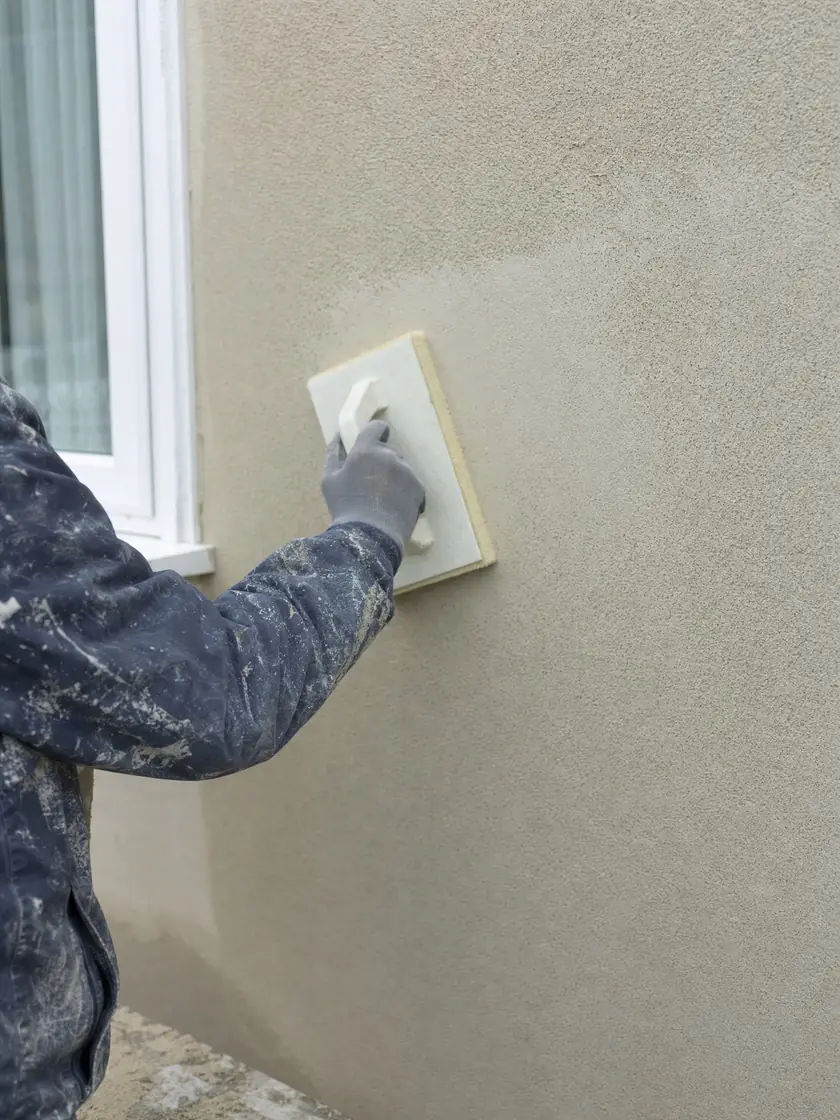
Gloved hand working a sponge float over fresh sand-coloured render beside a window
Texture matched by hand
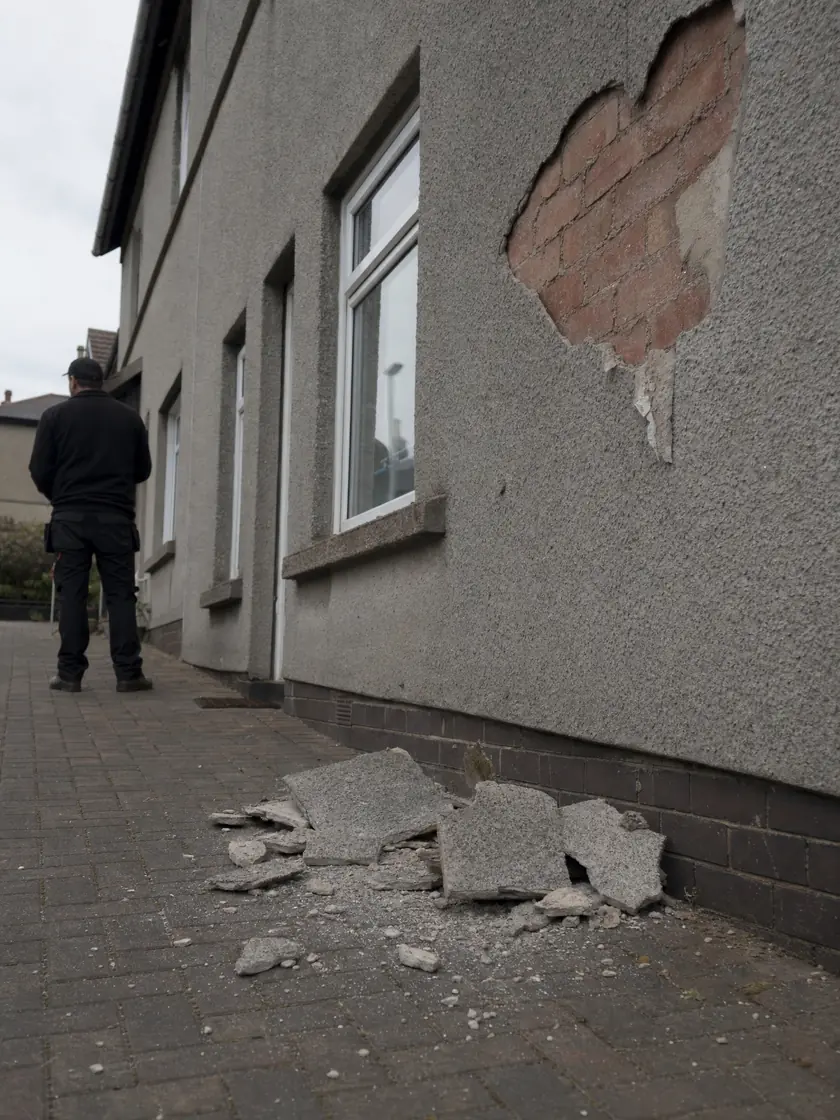
Broken pieces of grey render on block paving under a wall with a large patch of exposed brick, a person walking away
Loose render falls

How Long Does Render Repair Take and What Happens If You Wait?

Small jobs can take a day. Larger areas take several days, and the time can vary depending on access, weather and how much render has to come off. We tell you the likely time at the quote stage.

Waiting rarely helps, because a damaged property loses value as the damage spreads. Render damage left untreated lets water in. Over time, water damage inside the walls can spread out of sight.

Loose render can also fall and create a safety risk for anyone below. A fall of render can also create a mess and a bill.

Quick action keeps jobs small. Cracks left untreated only grow. Fixing small cracks with timely render repairs stops bigger and more expensive problems, and ignoring them can significantly increase the bill.

Effective repairs also extend the life of the building's exterior. A well-kept building needs fewer repairs in the years ahead, and a dry building is a warmer one.

Before you spend a pennyA repair that stays out of sightWe explain what we find, show you the damaged render and tell you the cost before we start.
Shown on siteDamaged render pointed out to you
Cost firstYour quote sets out the work and materials

How Much Does a Render Repair Service Cost?

These are our rough prices based on recent projects. They show what most homeowners pay for each type of job:

  • Small crack repair: from about £225 to £725
  • Localised patch repair: from about £450 to £1,200
  • Full re-rendering: from about £35 to £70 per square metre
  • Re-rendering a typical three-bedroom semi-detached house: from about £8,000 to £14,500
  • Scaffold for a two-storey house: from about £1,000 to £1,750

The cost of a render repair depends on the job, and the cost of scaffold can change the total. Prices vary depending on the size of the affected area, the type of render, the height of the wall and the access we need. Scaffold only comes into play on higher walls.

The price is a rough guide and the actual cost varies from house to house. Please use our contact form for an accurate quote.

Get Your Free Quote From TyneRend for Render Repairs Today

You do not have to guess how bad the damage is. Contact TyneRend and we will inspect your home, find the cause and tell you straight whether you need a patch or a full re-render of your exterior wall rendering. Your free quote for our render repair service comes with no pressure.

Tell us about your property, the damage you can see and where in the North East you are. Send the details through our contact form.

You can also contact us with photos of the damage. We will get back to you quickly to book your free quote.

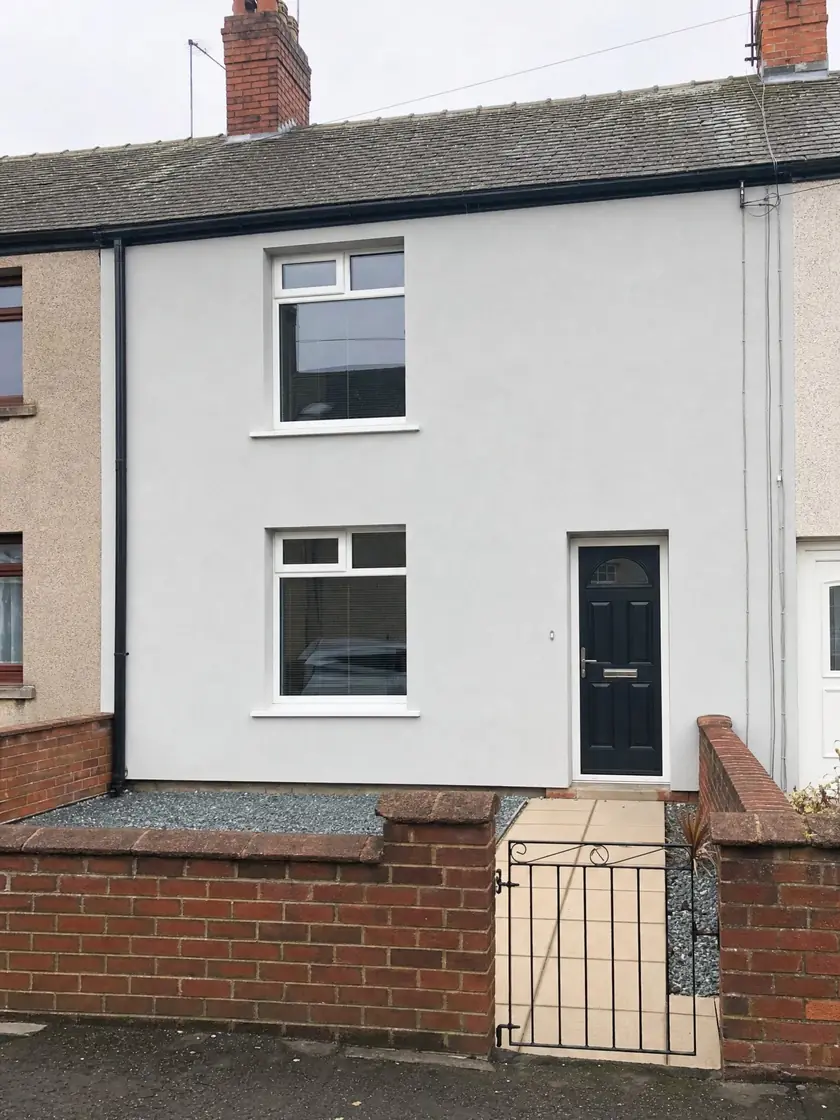
Terraced house front with even smooth pale grey render, white windows and a dark front door, no visible patches
Repair you cannot spot
Render repair questions

Asked on almost every survey

How much does a render repair service cost?

A render repair service typically costs from about £225 to £725 for a small crack repair and from about £450 to £1,200 for a localised patch repair, while full re-rendering runs from about £35 to £70 per square metre. These figures are a rough guide only and the actual cost varies with the size of the affected area, the type of render, the height of the wall and the access needed. Send us your details for an accurate free quote.

Is cracked render a sign of subsidence?

Cracked render is usually not a sign of subsidence, because shrinkage, weather and thermal movement cause most cracks. Wide cracks running diagonally from window or door corners, or growing wider toward the top, can point to structural damage. If we see those signs, we advise you to consult a surveyor or structural engineer before we touch the wall.

How can you tell if render is blown?

Blown render has lost its grip on the wall and sounds hollow when tapped. It can look fine and then drop off after the next hard frost. Contact us for a free quote and we will inspect the wall and tell you straight whether it needs a patch or a full re-render.

Do I need a patch repair or full re-rendering?

You need a patch repair when most of the render is sound and the damage sits in one area, while re-rendering suits blown render that spreads across a wall. Hollow patches in several places mean patching only delays the problem. We tell you which route suits your house, and why, before you spend a penny.

How long does a render repair take?

A render repair takes about a day for small jobs and several days for larger areas. The time varies with access, weather and how much failed render has to come off. We give you the likely timescale when we provide your quote.

What happens if I leave damaged render unrepaired?

Leaving damaged render unrepaired lets water in, which can cause damp and water damage that spreads out of sight inside the walls. Loose render can also fall and create a safety risk, and cracks left untreated only grow. Early repairs cost far less than late ones, so a free quote now keeps the job small.

Tired walls? Let us take a look.

Render repairs across the North East, with a free visit and the cost agreed before we start.

Free survey
Call Free quote